UX Designer
BERT Moderization Project
Transforming a Legacy Government Application Through Human-Centered Design
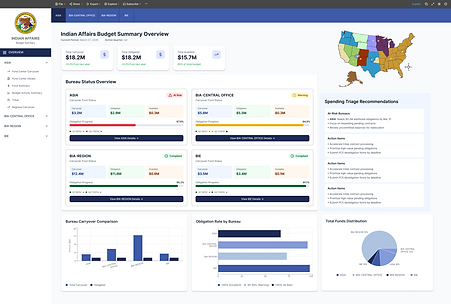
The BERT modernization project focused on redesigning and modernizing an existing government application to create a more intuitive, efficient, and user-friendly experience. While visual modernization was an important part of the effort, the true goal was improving usability and reducing friction for users navigating complex workflows and large amounts of data.
A major challenge of this project was limited direct access to end users, a common reality in government environments due to security, operational, and organizational constraints. Rather than allowing that limitation to stop the UX process, I adapted my approach and leveraged every available resource to uncover user needs and workflow pain points.
This included:
-
Reviewing existing user manuals and training documentation
-
Analyzing current workflows and system behavior
-
Partnering closely with stakeholders to understand operational goals and recurring challenges
-
Applying UX best practices and heuristic evaluations
-
Identifying opportunities to simplify navigation, reduce cognitive load, and improve decision-making efficiency
The modernization effort focused on:
-
Streamlining complex reporting and filtering workflows
-
Improving information hierarchy and data visibility
-
Designing faster paths to commonly used tasks
-
Creating clearer navigation and drill-down structures
-
Enhancing readability and scanability for large data sets
-
Supporting quicker decision-making through improved visualizations and dashboard organization
-
Reducing reliance on manual calculations and spreadsheet-heavy processes
This project demonstrates my ability to:
-
Lead UX strategy even in constrained environments
-
Pivot and adapt research methodologies based on project realities
-
Translate stakeholder goals into practical, user-centered solutions
-
Work collaboratively with developers in accelerated timelines
-
Balance modernization, usability, and technical constraints within government systems
While I always advocate for direct user research and validation whenever possible, this project highlights an important part of UX leadership in federal spaces: the ability to extract meaningful insights from limited inputs and still deliver thoughtful, human-centered solutions that improve the user experience.
Before


After