
UX Designer
BIA Probate App
Designing a compassionate digital experience for families navigating loss.
Overview
I led the UX strategy and experience design for a rapid, 5-week accelerated modernization effort focused on transforming the probate experience for citizens, BIA staff, and OHA reviewers.
The challenge wasn’t just digitizing paperwork. It was designing for people during one of the most emotional and stressful moments of their lives: the loss of a family member.
This project required balancing:
-
Human empathy
-
Complex legal workflows
-
Tribal, federal, and state compliance requirements
-
Multi-role operational workflows
-
Tight delivery timelines
I partnered closely with developers, stakeholders, and system architects from concept through delivery to rapidly define workflows, visualize experiences, and align technical capabilities to real human needs.
The Problem
The existing probate process was fragmented, manual, and emotionally overwhelming for families. Citizens often:
-
Didn’t know where to begin
-
Worried about fraud and lost documents
-
Had little visibility into case status
-
Repeated information across offices
-
Faced long timelines and confusing processes
Internally, staff struggled with:
-
Disconnected systems
-
Manual validation work
-
Missing documentation
-
Delayed handoffs between offices
-
Difficulty tracking compliance and audit history
This created stress for both families and government staff.
My Role
As the UX lead, I was responsible for:
-
Human-centered UX strategy
-
Persona development
-
Journey mapping
-
Experience storytelling
-
Workflow visualization
-
User empathy framing
-
Rapid prototyping concepts
-
Cross-functional collaboration with developers
-
Translating technical requirements into human experiences
Because of the compressed timeline, I worked in a highly iterative environment alongside developers and stakeholders to quickly evolve concepts into actionable experiences.

Human-Centered Approach
I started with people.
I created detailed personas representing the entire ecosystem:
-
Maria - grieving granddaughter navigating probate for the first time
-
James - BIA Customer Relationship Agent supporting families
-
Andrew - compliance-focused back-office specialist
-
Dakota - OHA reviewer responsible for final legal decisions
The goal was to understand:
-
What each person needed
-
What they feared
-
Where friction occurred
-
How technology could reduce stress instead of adding to it
This became the foundation for the experience strategy.
UX + Operational Thinking
This project extended beyond traditional UI design. I focused heavily on:
-
End-to-end service design
-
Workflow optimization
-
Cross-role communication
-
Compliance-aware experiences
-
Human-in-the-loop AI validation
-
Operational handoffs between agencies
The experience design mapped not only what users saw, but also:
-
What staff reviewed
-
How decisions were documented
-
How cases moved between departments
-
How audit trails and compliance requirements were maintained
This helped align technical architecture with real operational workflows.

Key UX Contributions
Persona Development
Created role-based personas grounded in emotional and operational realities.
End-to-End Journey Mapping
Mapped the complete probate lifecycle from death notification through title transfer and fund distribution.
Human-Centered Storyboarding
Developed storyboard-style experiences showing how technical capabilities translated into real human moments.
Rapid UX Visualization
Produced fast-moving concepts and workflow visualizations in close collaboration with developers.
AI + Human Workflow Design
Balanced automation with human support to maintain trust and transparency.
Accessibility & Mobile Considerations
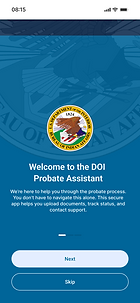
Designed around mobile-first behaviors and low-friction interactions for emotionally stressed users.

Outcomes
The proposed experience demonstrated how modernization could:
-
Reduce confusion and document loss
-
Improve transparency for families
-
Streamline staff workflows
-
Accelerate case processing timelines
-
Improve compliance visibility
-
Create stronger trust between citizens and government services
Most importantly, the work showed how thoughtful UX can transform complex government systems into experiences that feel supportive, clear, and human.


Reflection
This project reinforced that UX is not just about interfaces, it’s about understanding people, systems, emotions, operations, and outcomes simultaneously.
Working under a 5-week accelerated timeline required rapid decision-making, deep collaboration with developers, and the ability to quickly turn ambiguity into structured, human-centered solutions.
The final result was not simply a probate application concept, it was a vision for how government technology can better support families during deeply personal moments.